

Electrification, skills shortages, and digitalisation are rapidly reshaping aftersales – and for dealerships that want to keep up, technology is no longer a nice-to-have. It’s how they stay competitive.
Self-service sits at the forefront of this transformation, enabling dealers to deliver a seamless customer experience while driving leaner operations and profitability.
Here’s how modern dealers are increasingly relying on self-service solutions to maximise efficiency and growth.
More revenue, zero extra effort
Every customer interaction is a revenue opportunity – but when service advisers are stretched thin, upselling quickly becomes an afterthought.
Self-service solutions help dealers capture more value from every visit without pulling service teams away from other priorities.
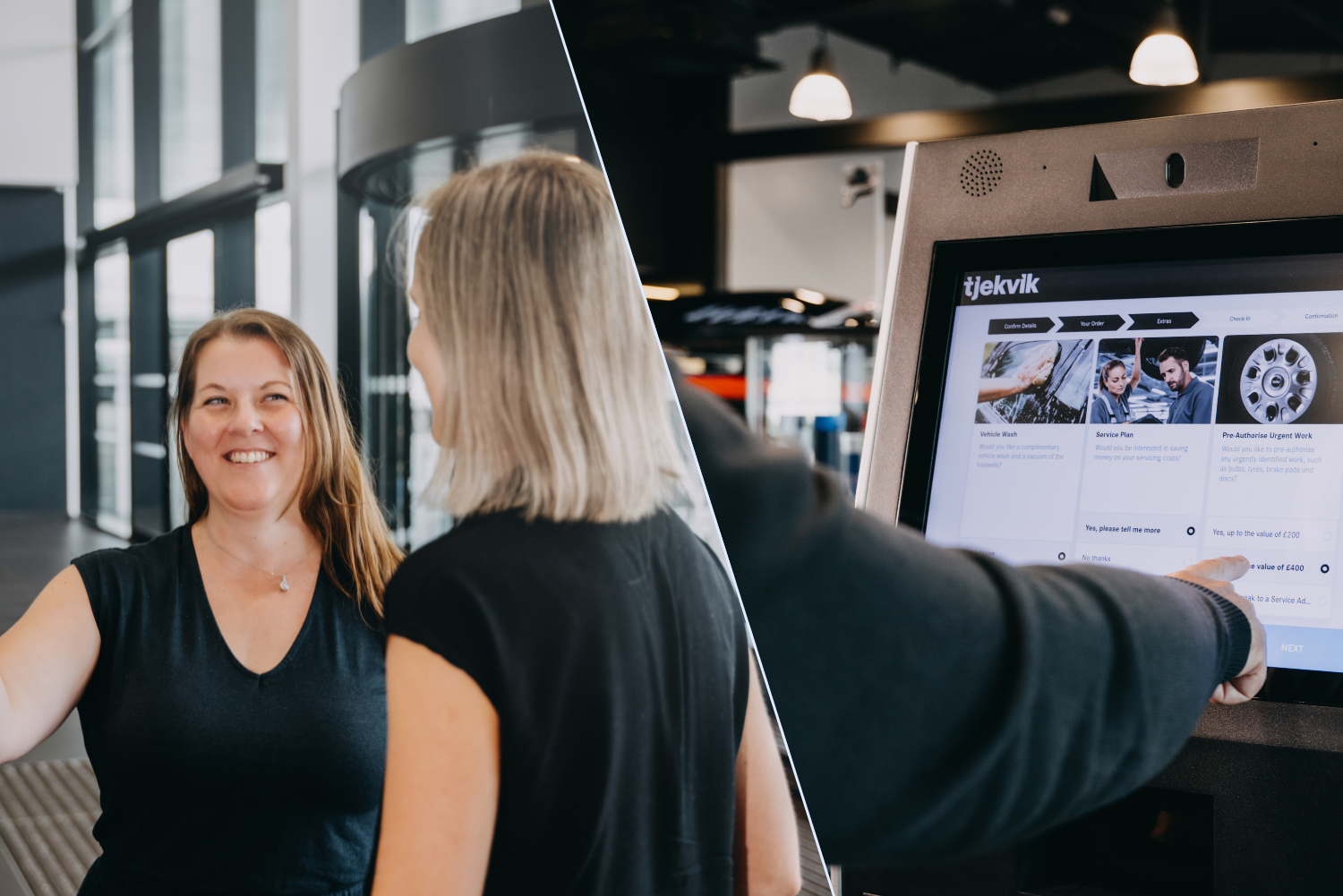
By displaying targeted offers and products during home check-in or when dropping off vehicles at self-service kiosks, dealers drive additional revenue before the customer even arrives at the dealership.
In 2025 alone, Tjekvik dealers generated over €19.5 million in additional revenue through upsells.
But the key is relevance: showing the right offer to the right customer at the right time.
Tjekvik’s Smart Rules allow dealers to tailor their self-service offers based on customer type (retail or fleet), vehicle make or model, and even work order details. Showing products, services, and seasonal offers in a way that feels timely and personalised significantly increases conversion rates and encourages higher spend per visit, without putting strain on service staff.
Operational gains without the overhead
Beyond revenue, self-service also changes how dealerships operate day-to-day. By reducing reception bottlenecks and automating routine tasks, these platforms free service advisers from time-consuming admin and allow them to focus on higher-value interactions with customers.
The impact can be significant.
One Stellantis &You dealership in Hamburg reports that service advisers saved 5 to 10 minutes per customer interaction, because work orders are often ready by the time customers arrive at the dealership.
Service advisers just retrieve the key from the kiosk and inform the customer about the costs, which allows them to manage more appointments in less time.
And the more of the journey is self-managed by the customer, the more time staff get back – no bottlenecks, better throughput, and higher productivity across the board.
Michael Mertens, Aftersales Director for Germany and Austria at Stellantis &You
Smarter stock management, lower costs
Self-service platforms also give dealers a smarter approach to inventory planning.
When upselling shifts online, before the visit, dealers gain visibility into what customers are likely to want. This intelligence enables them to make smarter stocking decisions – the right products ordered at the right time means with less excess sitting on shelves, and lower storage costs.
For dealerships managing multiple brands, this is particularly valuable. In Sweden, Deluxe Bil handles eight authorised brands, plus additional makes, so keeping everything in stock at their facility would be costly and difficult.
Using Tjekvik’s Home Check-in, the dealership enables customers to select products before arriving for their service visit.
The result? A leaner, more profitable operation, with service advisers freed up to focus on identifying further sales opportunities at the point of handover.
Discover Deluxe Bil’s success story.
The bottom line
The dealerships thriving in today’s market aren’t simply adopting new technology – they’re using it to build smarter, more profitable businesses.
Self-service platforms give customers more control over their experience, reduce queues and wait times, and allow staff to focus where they add the most value.
With the added benefits of smarter inventory management and personalised promotions, these tools help dealers deliver experiences that customers love and reflect on the bottom line.
Want to see what Tjekvik can do for your dealership? Get in touch with our team.