


I picked up my first-ever car a few weeks ago. It was an exciting milestone, and one that came with a fair amount to figure out along the way. What surprised me most wasn’t the car itself, but how much of the process depended on fitting a dealership visit into a week that rarely looks the same twice.
My schedule shifts constantly. I’m a freelance marketing assistant and I teach dance classes, so my time is shaped by competitions, training, and whatever else is happening in a particular month. Some weeks I have a free morning. The next week, that window is gone. There is no fixed start or finish time for me, and increasingly, that is true for a lot of people.
The standard working week is no longer the default
Many people still work traditional office hours, and that is not going away. But since the pandemic, remote work has moved from a rare perk to a genuine norm. Combine that with the number of people working in hospitality, events, entertainment, freelance roles, and shift-based retail, and a significant portion of younger buyers simply do not have free time that lines up with a Monday to Friday, 9 to 5 pattern.
Dealerships, understandably, are still largely built around that traditional structure. Opening at nine, closing by six, closed on Sundays. When your working life does not follow that same rhythm, the process becomes considerably harder to navigate.
What that meant in practice
Booking my test drive around my week took several attempts. Collecting paperwork meant rearranging my day to get across town before closing time. Almost every step was built around the assumption I had a predictable gap to spend on it, and most weeks, I simply do not.
The process was not built with someone like me in mind. It was built for a predictable Tuesday.
Where self-service would have made the difference
My dealership did not have a self-service option for collection, check-ups, or servicing, so I worked around the usual constraints: matching staff availability, working hours, and my own limited windows of free time.
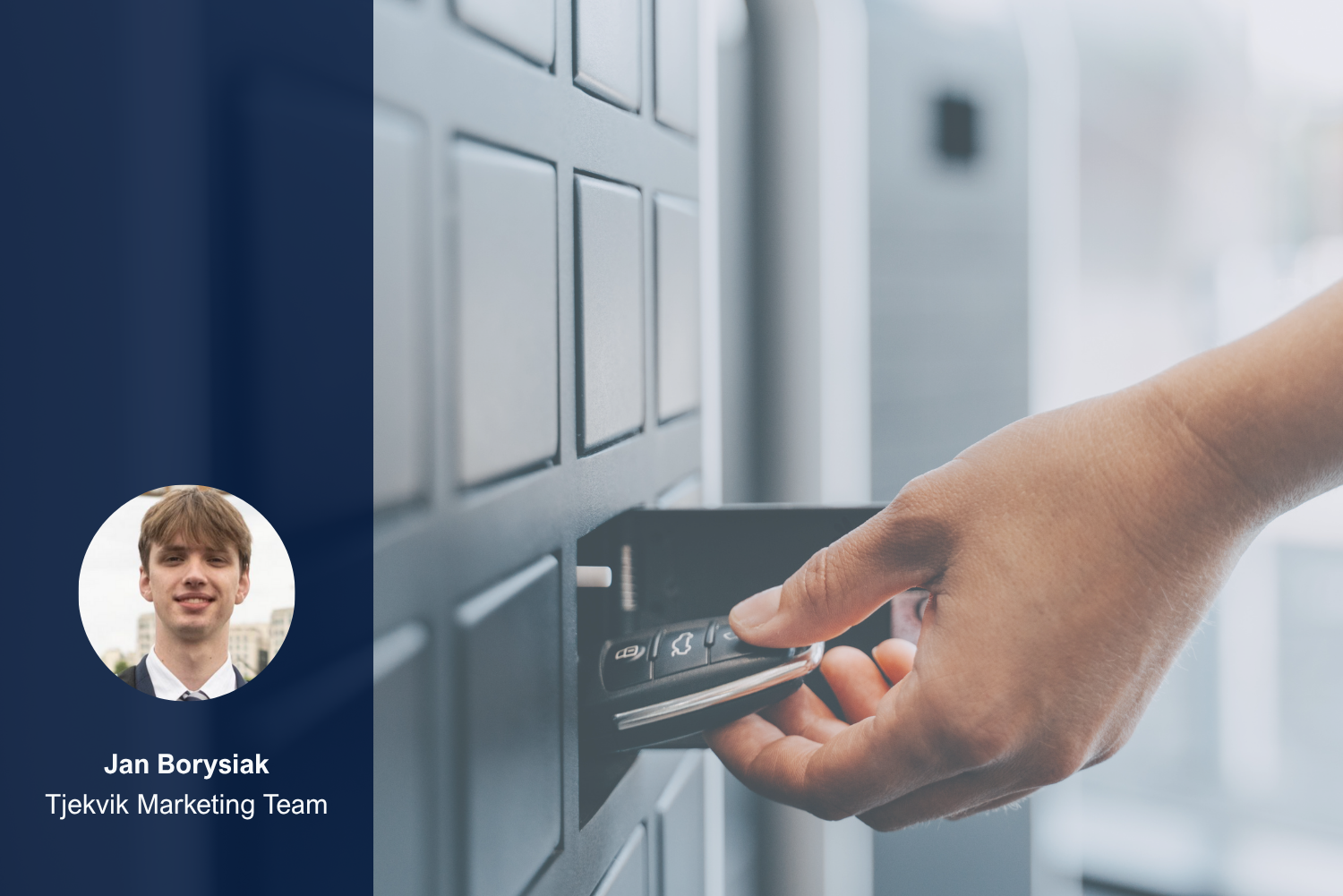
Looking back, a self-service kiosk would have solved most of this. No waiting for a specific member of staff, no working around someone else’s opening hours, no rearranging my day to make it happen. I could have arrived when I was able to, checked myself in, and continued with my day.
Self-service solutions like Tjekvik’s are not simply a convenience for people squeezing an errand into a lunch break. They are, arguably, even more valuable for people whose working pattern does not include a lunch break in the first place: shift workers, freelancers, remote employees, and anyone whose week changes from one to the next.
The bigger picture
Younger buyers are not asking dealerships to be open around the clock – nor would that be fair for the dealership staff. What they want is for the parts of the process that do not require a person, to not require one. Check-in, check-out, document handoff, and key collection are largely administrative tasks, and there is little reason they should depend on matching someone else’s calendar.
This is not a passing trend. The working patterns shaping my generation – remote work, freelance and gig-based roles, irregular shifts – are likely to stay the norm rather than the exception. Dealerships that want to stay ahead will also need to adapt to this reality rather than wait for buyers to fit around a schedule that fewer and fewer people have.
Get that right, and the experience starts to reflect how people actually live today, rather than simply how a dealership happens to be staffed.